 New York Drain Cleaner
Call 24/7 · (844) 923-3233
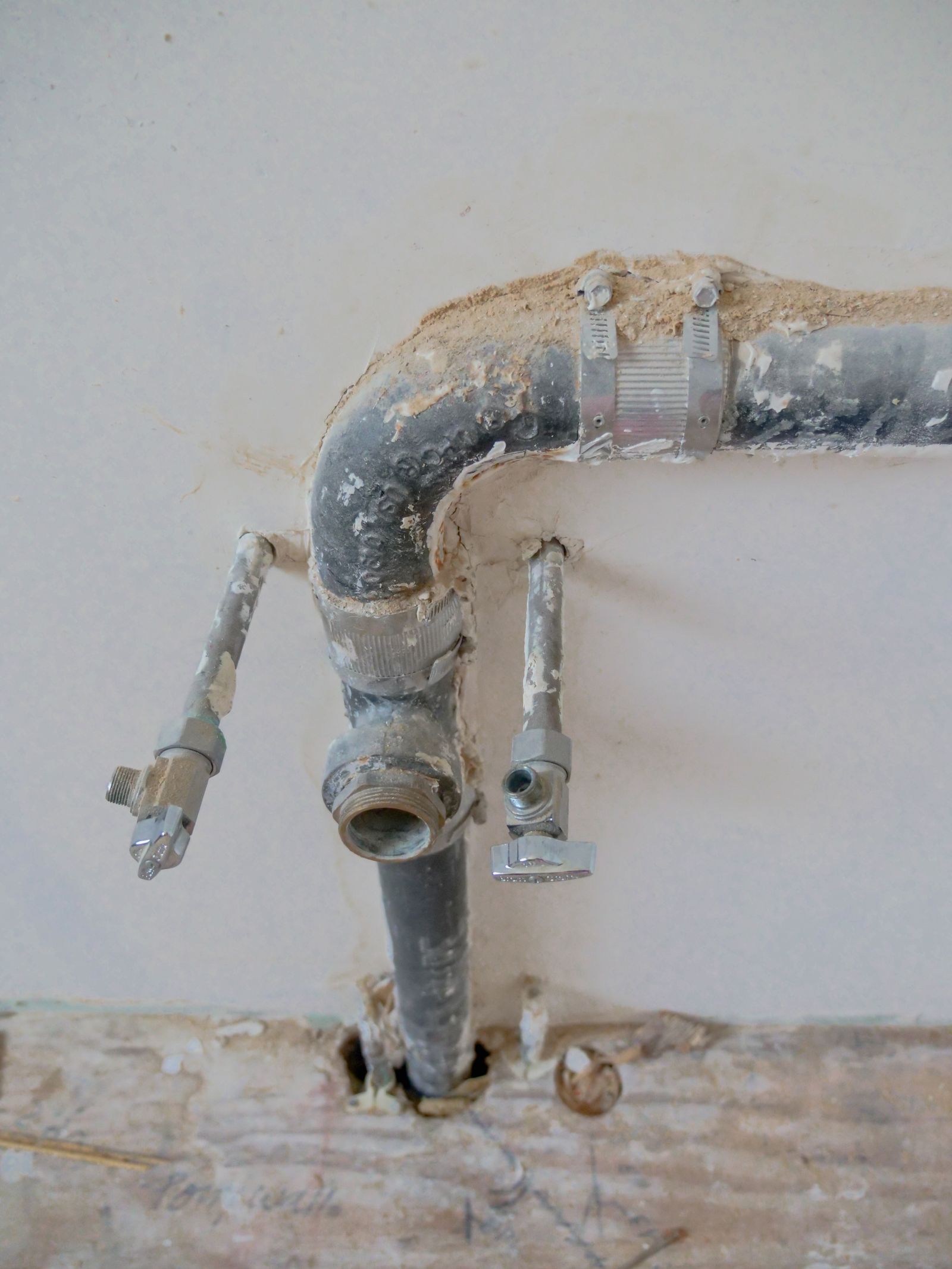
House Trap Clog Services in New York
Need house trap clog services in New York? Here is what the work involves and what to tell the dispatcher. Many older New York buildings have a house trap: a U-shaped trap on the building drain near where it leaves the house. It’s a common cause of whole-building backups in brownstones, rowhouses and two-families, and almost nobody explains it. This page does.
House Trap Clog Services in New York: Find your house trap
Not every New York building has one, but if yours does, it is a U-shaped trap on the building drain with two cleanout plugs on top. Fresh-air inlets are the short pipes outside.
On a house Trap Clogs in New York City and Older Homes job, please leave the plugs alone and tell the technician where they are. The technician confirms what your building actually has.
What a house trap is
A house trap is a U-shaped section of pipe on the building drain, usually in the cellar or basement near the front wall, just before the line heads out to the street. Like the trap under a sink, it holds a little water in its bend. It’s common in older brownstones, rowhouses and two- or multi-family buildings in the city, and is found in some older homes elsewhere in the state.
Not every older building has one, and not every one that does is easy to spot. A technician can tell with a camera or by looking at the pipe.
How to recognise one
The giveaway is a pair of round, threaded cleanout plugs on top of the pipe, side by side, often at floor level and sometimes in a small pit. Together they look like two coin-sized discs on the pipe. Outside, near the stoop or front steps, there may be a short vent pipe or a grate. That’s the fresh-air inlet, which lets the line breathe.
If you see two plugs near the front wall, tell the person who answers the phone. It tells the crew what to bring. Please don’t open them yourself.
Why they clog
The bend in a trap is a natural place for heavy debris to settle. Grease, paper, wipes, and in older lines, scale flaking off the cast iron all end up there. Over time the trap narrows, and when it finally blocks, everything upstream stops.
The effect is dramatic: all fixtures in the building slow or back up, and the lowest drain shows it first. That’s why a house trap is so often the first place a technician checks in an older building.
Why you shouldn’t open the plugs
If the line is full, the trap is holding back everything above it. Removing a plug releases that water into the cellar, where it’s hard to control. The plugs can also be corroded and difficult to turn, and some are in poor condition after decades.
The technician will arrive with the right tools and a plan for the water. If you’re curious, you can ask to see what’s inside once it’s open.
How the technician clears it
The technician opens a cleanout on the trap or elsewhere on the building drain, runs a cable through, and clears the blockage. Water is run to check the line is moving, and a camera is often used to look at the trap and the line beyond it.
A camera is also how the technician finds out whether the trap is the whole story or part of a larger problem further out, such as roots in the line to the street.
Co-ops, two-families and who to tell
In buildings with more than one unit, tell the super, landlord or managing agent first. They know the building’s lines and can give access to the cellar. If the trap serves the whole building, the work often needs to be coordinated with them.
We connect you with a local crew. The arrangement with your building is between you and them. Tell the technician who to ask for on arrival.
House trap or no house trap: why it matters
Some buildings had their house trap removed during earlier plumbing work, and some never had one. Others have one that is buried under a later floor or hidden behind a wall. Knowing which you have changes where a technician starts. With a trap, the first move is often to open one of its two cleanouts and cable through it. Without one, the building’s main cleanout or a vent stack is the likely access point.
If you are buying or managing an older building, a camera inspection is the quickest way to learn what the drain actually looks like. It shows whether there is a trap, what condition it is in, and whether the line beyond it toward the street is clear, rooted or collapsed in places. That picture is worth having before a problem forces the issue.
Brooklyn, Queens, the Bronx and beyond
In Brooklyn brownstones and rowhouses, the building drain often runs a long way from the cellar out to the street, through ground that has seen more than a century of change. In Queens two-families and attached houses, the trap may sit under a finished or partly finished cellar, so access can take planning. In the Bronx and in older neighbourhoods of Yonkers, Mount Vernon and New Rochelle, similar layouts turn up.
Upstate, older housing in Albany, Troy, Schenectady, Syracuse, Utica, Rochester and Buffalo can also have traps and clay laterals that are well past their first century. The details differ from block to block; the principle is the same. A trap is a catch point on an old line, and old lines carry what has flaked from their walls.
Keeping a house trap clear
Nothing makes a trap immune to clogging, but habits help. Keep grease out of kitchen drains. Treat wipes marketed as flushable as trash. Use a strainer in tubs and showers, and be careful with anything that might break loose from the pipe wall. If you have had one backup, ask the technician about the condition of the trap and the line, so you know whether a repeat is likely.
A building that has had two or three backups in a few years is a good candidate for a camera inspection and a conversation about options. We would rather you hear that from the technician, with footage, than from us in general terms.
Fresh-air inlets and venting
Many buildings with house traps also have a fresh-air inlet, a short pipe, often with a grate, near the front steps or stoop that lets air into the building drain. It helps the line drain smoothly and carries off sewer gas through the roof vent. If the inlet is blocked by debris, snow or ice, the line can drain slowly and gurgle.
Keep the inlet clear of leaves and snow. If it is missing or covered over, mention it to the technician; it can affect how the line behaves.
What the camera shows in a trap
A camera passed through a trap shows a lot: heavy scale, a mass of paper and grease, a cracked section, or an open and clean bend. It can also show how much sediment has built up at the low point of the U, which is the first place debris lands.
Good footage lets the technician explain what they are seeing and what, if anything, to do next. If the trap is sound, the advice is often simply to keep the line clear. If it is damaged, the technician can talk you through options.
Removing a trap: what to know
In some older buildings, the house trap has been removed during other plumbing work, usually because it became a repeat trouble spot. Whether that is a good idea depends on local code and the building’s other lines, and it is not a decision for a clearing crew to make on the spot.
If a technician raises the idea, ask why, ask what the code says in your municipality, and ask for the camera footage supporting it. It is a legitimate option in some cases and unnecessary in others.
Preventing repeat trap clogs
Keep grease out of the drains, strain tubs and showers, and keep wipes out of the toilet. In older buildings, a periodic cleaning of the trap and line is cheaper than an emergency call. How often depends on the building and its habits, and the technician can suggest an interval after a visit.
Managers of multi-unit buildings often schedule cleaning each year or two. It is a sensible approach for any building with a history of backups.
Whole building backing up from the cellar?
Tell us what you see near the front wall of the cellar. A technician with the right cable and camera can take it from there.
Common questions
Does every old building have a house trap?
No. They’re common in older city buildings and in some older homes elsewhere in the state, but not universal. A technician can tell by looking at the pipe or running a camera.
How do I find my house trap?
Look in the cellar near the front wall for two round plugs side by side on a larger pipe. Outside, there may be a short vent near the front steps. If you can’t find it, tell the technician what you do see.
What is the fresh-air inlet?
It’s a short pipe or grate outside, usually near the stoop, connected to the building drain. It lets air in so the line can drain smoothly. Many older buildings have one.
Can I open the trap plugs myself?
We’d recommend against it. If the line is full, the plugs hold the water back. Opening one can release it into the cellar.
Why does the whole building back up at once?
The trap sits on the main building drain. When it clogs, every fixture upstream is affected, and the lowest points show it first.
Will it come back for house trap clog?
Yes, it can. Grease and scale build up again over time. A camera shows the condition of the trap and the line, and the technician can tell you what’s likely. No one can promise it won’t return.
I’m a tenant. Who do I call?
Start with your super, landlord or managing agent. They handle access to the building’s lines. You can call us with details and they can coordinate.
Is this an emergency?
If water is coming up through the cellar drain or fixtures are overflowing, yes. If the building is only slow, it’s still worth acting promptly, because a partial blockage tends to become a full one.