 New York Drain Cleaner
Call 24/7 · (844) 923-3233
Drain Cleaning Services in New York City, NY
Looking for drain cleaning services in New York City, NY? We connect you with independent local drain crews. New York City buildings carry a century or more of plumbing. Brownstones and rowhouses often have house traps in the cellar. Pre-war apartment buildings have large cast iron stacks shared by many units. Two-families, attached houses and small businesses fill in between. We connect you with crews that work buildings like yours across all five boroughs.
Buildings, not blocks
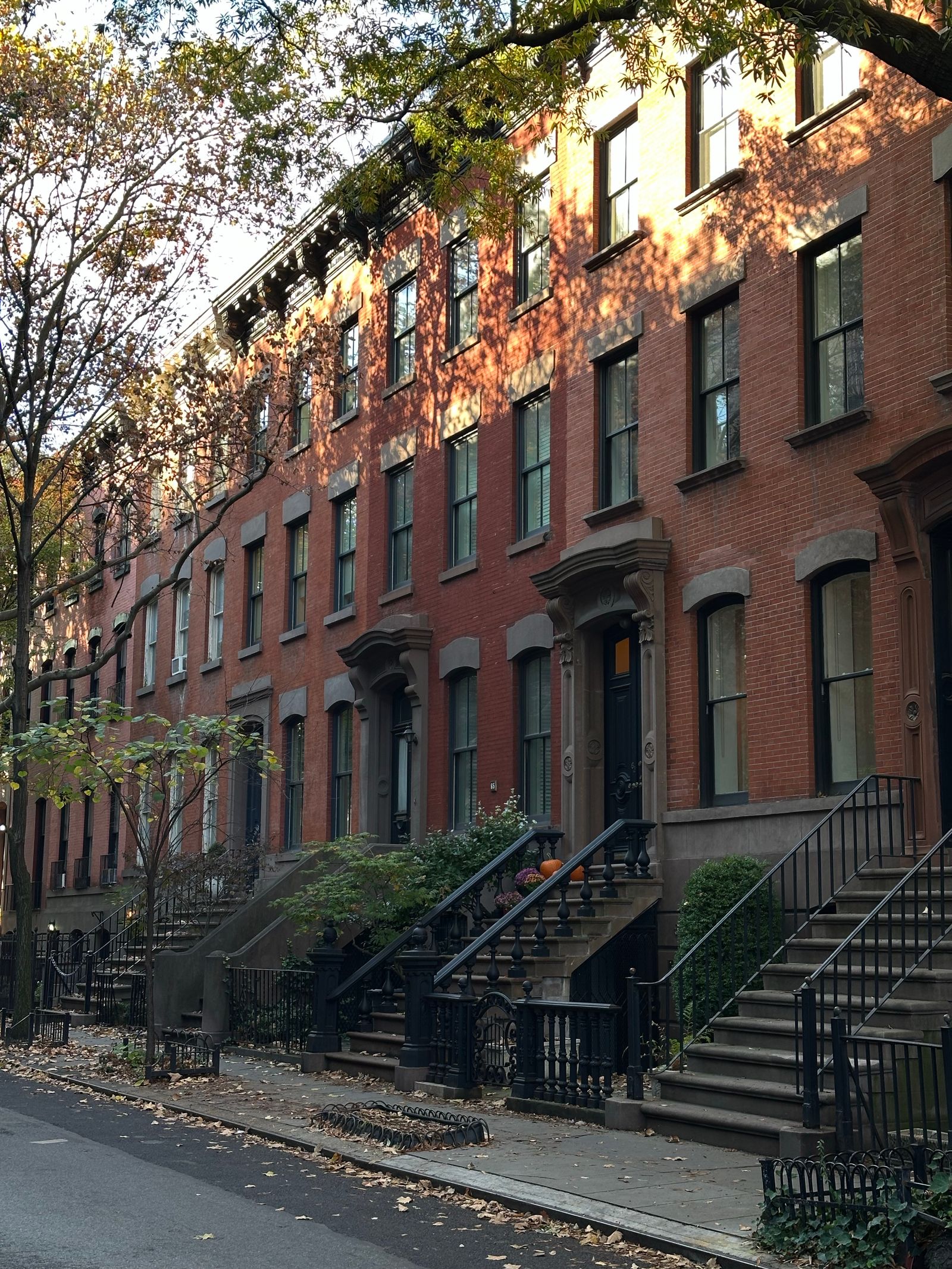
In the city, the building matters more than the street. A four-storey brownstone, a pre-war apartment building, a two-family with a finished cellar and a detached house on the outer edge each call for different tools and different questions.
We describe drains by building age, building type, pipe materials and access, because those decide the job.
House traps
Many older brownstones, rowhouses and two-families have a house trap, a U-shaped bend in the building drain in the cellar, usually near the front wall, with two round cleanout plugs on top. When it clogs, the whole building backs up from the cellar.
Please do not open the plugs yourself. If the line is full, the trap is holding back everything above it.
Shared stacks in apartment buildings
In pre-war and post-war apartment buildings, kitchens and bathrooms in each unit join vertical stacks shared with units above and below. A clog in your branch affects you. A clog in the stack affects everyone below, and the lowest unit sees it first.
The super or managing agent controls access to the cellar and the cleanouts. Tell them first, then call us.
Pipe materials and what they do
Older city buildings have cast iron stacks and building drains, some with lead and oakum joints, and brass or galvanised branch lines. Scale builds up inside. Newer work uses copper and plastic branch lines joined to the old iron. The transition points are often where trouble starts.
A technician who knows these materials chooses the cable head and the pressure to suit.
Fresh-air inlets and venting
A short pipe or grate near the stoop or front steps may be a fresh-air inlet that lets the building drain breathe. Keeping it clear helps the line drain smoothly. Roof vents can be blocked by nests, leaves or ice.
If you hear gurgling in several fixtures, the vent may be part of the picture.
Restaurants and commercial kitchens
The city has more food businesses per block than almost anywhere. Grease, food solids and heavy dish-machine flows go into building drains that were laid out long before. Scheduled cleaning is usually cheaper than emergencies.
The technician clears lines. We do not service grease interceptors.
High-rises and managed buildings
In large managed buildings, most drain work is handled by the building’s own staff and contractors. We say so honestly. The crews we connect you with mostly work on small buildings, townhouses, two- and three-families and commercial kitchens, and branch lines within units.
If you are in a large building, start with management.
How a call works in the city
Call and tell us your borough and neighbourhood, your building type, which fixtures are affected, and whether the super knows. We match you with an independent crew that works your area. The crew we connect you with gives you the price before work begins, and there are no hidden fees.
The crew clears the line, confirms flow, and often puts a camera down to see the house trap and the line beyond.
Brownstone Brooklyn, rowhouse Queens, Bronx apartments
Housing types vary a great deal from borough to borough and neighbourhood to neighbourhood. Brooklyn has long blocks of brownstones and rowhouses with house traps and long laterals. Queens has attached rowhouses, semi-detached houses and detached houses on the outer edges, alongside apartment buildings near transit. The Bronx combines pre-war apartment buildings with rowhouses and detached houses. Staten Island is mostly one- and two-family houses, many of them post-war.
Manhattan is dominated by apartment buildings, co-ops and condominiums, with townhouses and small walk-ups. Each borough page explains the housing and drains in its neighbourhoods.
Access in dense buildings
Cellars in older buildings are often cramped, shared or locked. A technician needs to know who has the key, where the cleanout or the trap is, and how to get a machine down the stairs. The super or the managing agent usually has the answers.
In a brownstone with a rented garden apartment, the cellar may be part of the tenant’s space. Tell us who lives there and how to reach them.
Narrow streets and parking rules matter too. A crew arriving with a jetter needs somewhere to stand. Tell us if your block is hard to park on.
Rules, permits and building management
Co-ops and condominiums usually have rules about contractor hours, insurance and access. Some buildings require a certificate of insurance. Tell the managing agent early, and tell us if the building has requirements.
We connect you with independent crews. The arrangement with your building is between you and them.
If you manage buildings, tell us when you call, so we can talk about scheduled work as well as emergencies.
Winters, thaws and storms in the city
Heavy rain can load older combined sewers in some neighbourhoods, and low-lying basements feel it first. A cellar floor drain that bubbles during a storm may be reacting to the system. A drain technician can make sure your own line is clear.
We cannot promise that cleaning prevents storm backups. We can tell you what the camera shows.
Cold snaps can freeze exposed lines in unheated cellars and rear extensions.
Choose your borough
Each borough has its own pages by neighbourhood.
Drain trouble in the five boroughs?
Tell us your neighbourhood, your building type and what is backing up. We will connect you with a local crew.
Common questions
Why do so many older New York houses have a house trap?
Many were built when a trap near the cellar wall was standard, to keep sewer air out of the house. The fitting survives in older houses and can fill with heavy debris.
Should an apartment tenant call the super before the dispatcher?
Yes, in a managed building. The super or agent controls access and knows the cleanouts, and can say whether an outside crew is allowed.
How can a tenant tell a stack problem from a sink problem?
If neighbors on the same line are slow too, the stack is the likely cause. If only your sink is slow, it is probably your branch.
Do you work in high-rises?
Mostly in smaller buildings. Large managed buildings usually handle drains through their own staff and contractors.
Can you work in a brownstone cellar?
Yes. Tell us about the layout and where the plugs and the cleanout are.
Do you clean restaurant grease traps?
No. The technician clears the lines. Interceptors are serviced by others.
Is a backup at night an emergency?
If waste water is coming up and spreading, yes. Call right away.
Do you cover all five boroughs?
Yes. Choose your borough on this page to find your neighbourhood.